
The Invisible Factor

Air you can’t see. Health risks you can’t ignore. Insights you can trust.

What You’ll Find

Welcome to Lungera’s thought center where the unseen threats in your air meet expert guidance. Whether you're a homebuyer, realtor, or health-conscious homeowner, our articles help you stay informed, proactive, and protected. We break down complex topics like radon gas, air quality monitoring, and real estate compliance into simple, actionable insights you can actually use.

Blog Categories:

Radon Education

Understand the risks, the science, and the solutions.

Real Estate Resources

Support for buyers, sellers, and agents navigating radon in transactions.

Monitoring Insights

See how air quality monitoring adds long-term peace of mind.

Indoor Air Quality Tips

Easy ways to breathe cleaner, safer air at home.

Featured Posts

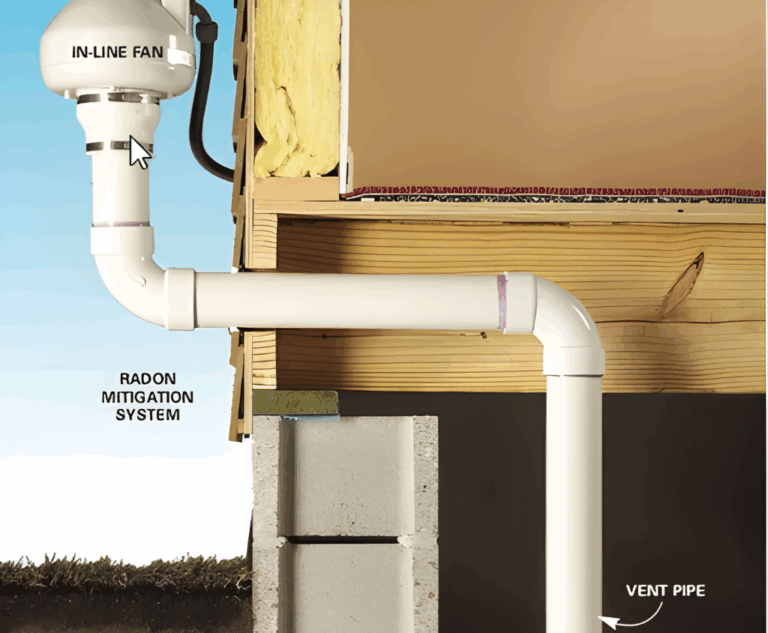
Radon Mitigation: How Does It Work?

Radon Mitigation: How Does It Work? A Homeowner’s Guide to Sub-Slab Depressurization If your home tested high for radon, you’re likely wondering: Now what? The good news is that radon mitigation is a...
The Science of Radon: From Discovery to Present Day

The Science of Radon: From Discovery to Present Day Discovery of Radon Radon was first identified in the late 19th century during the study of radioactive elements. In 1899, physicists Ernest...
High Radon? Don’t Panic: Your Guide to a Stress-Free Real Estate Closing

High Radon? Don’t Panic: Your Guide to a Stress-Free Real Estate Closing The good news is in: Your offer was accepted! After weeks or months of searching, countless property visits, and...

Frequently Asked Questions

The EPA recommends taking action if radon levels in your home are 4 picocuries per liter (pCi/L) or higher. Lower levels are preferable, but any level of radon carries some risk.

Radon Mitigation Installation cost typically ranges from $1,299 to $3,000 +, depending on the system and building specifics.

Installation usually takes between 4 to 8 hours, depending on the complexity of the building’s structure and the type of system being installed.

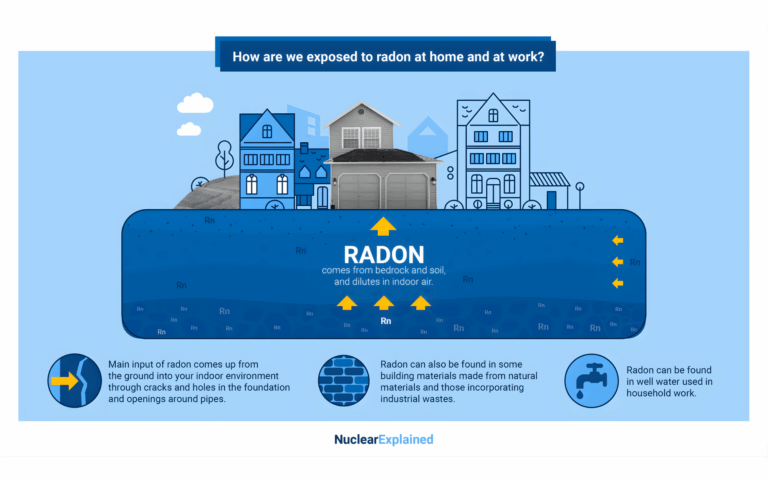
Radon can enter homes through cracks in foundations, gaps around pipes, sump pumps, and other openings in the structure. It can also be present in well water and released into the air when water is used.

You can use continuous radon monitors or perform regular short-term and long-term radon tests to ensure levels remain low. It’s recommended to test your building at least once every two years.